Boyd Group's record quarter, read under the hood
Boyd Group reported "record Q1 sales of $996.7 million" last week. Revenue up 28%, adjusted EBITDA up 52%, EBITDA margin expanded 200 basis points. It read like a great quarter.
Same-store sales were up 1.7%. Weather-adjusted, 2.6%.
If you read collision MSO earnings the way a Fortune 500 finance person reads them, that gap is the story. The 28% growth headline is overwhelmingly the Joe Hudson's acquisition rolling in for its first full quarter. About $168 million of revenue from that single deal in 12 weeks. Of the 28-point revenue lift, roughly 25 points came from acquisitions and new builds. 1.7 points came from the stores that were already operating.
Want insights like this in your inbox?
Subscribe to the Collision Advisory newsletter. Financial strategy and industry analysis for collision repair operators, delivered weekly.
The headline number versus the operating number
Boyd's long-term growth framework calls for 3% to 5% same-store growth, plus 5% to 7% annual unit growth from M&A and greenfield builds. The combination is supposed to compound into double-digit total growth.
Right now they are at the bottom of the same-store range or below it depending on whether you weather-adjust. When the CIBC analyst pressed on the gap between Boyd's Q4 2025 guidance and the March 2026 actuals, the CEO pivoted to long-term averages and reframed:
"The difference between 2.2% and 1.7% is really about $3 million of sales. That $3 million of sales is, on a billion dollars of revenue at this point, quite a small difference."
That is a CEO answering a question he did not want to answer. The Q4 guide was wrong. He will not say it.
What management is hedging
Two other moments on the call jumped out. Stifel's analyst asked the direct version of the share-gain claim Kaner had made four times across the morning: where is Boyd right now relative to a 2019 volume baseline, and how much latent capacity is in the network? Kaner declined: "I don't know that we'll share the specific volume numbers against 2019." The thesis is alive on narrative, not on a number anyone can verify.
And on the framework itself, Kaner admitted directly: "During recent quarters, the growth in average total cost of repair has fallen below the expected range required to support our long term growth framework." TCOR (total cost of repair) is the 3% to 4% inflation lever the framework assumes. It is running below. His explanation for why it fixes itself stacks two macro variables: total losses normalize as used car prices rise, plus the aging car park drives more aftermarket parts consumption. When a CEO needs two independent variables to break the right way for the framework to hold, you are in guidance-preserved-by-storytelling territory.
The line operators of independent shops should read twice
Buried in an answer to a question about deal pipeline:
"As volume comes back into the marketplace, it comes back to the bigger players fastest. That's the nature of the DRP relationships that we have."
That is the operating thesis in one sentence. When industry volume turns, the consolidators get their share back first because the DRP carriers route work to them before they route to anyone else. The thesis was implicit before this call. It is now on the record.
What this tells you about the market you operate in
Three things land if you read this earnings call as an independent shop operator.
One. The macro is what it looks like. Boyd reports repairable claims down 0% to 2%. That is not your shop alone. It is the whole industry. If your volume is flat, you are running consistent with the largest player. If your volume is down hard, you are losing share to either consolidators or other indies in your local market.
Two. The calibration internalization is real and structural. Boyd is at 80%+ internalization across markets, with some markets in the 90s. The CFO added that the calibration market itself is still growing, so total volume is still expanding even as MSOs pull share in-house. For shops that have been earning sublet revenue from MSO calibration overflow, that pipeline is closing.
Three. The "we win volume back first" thesis is a DRP routing thesis, not a service quality thesis. The largest player is telling investors that recovery in the macro flows disproportionately to MSOs because of DRP relationships, not because the work is better. That is the lever to compete on. If you are an indie shop with DRP relationships, your scorecard performance against those carriers is the difference between getting your share of the recovery and not.
The headline number on a public collision MSO is the press release. The operating number is buried in the math. Same-store growth tells you how the business is actually running. Acquisition revenue tells you how big the checkbook is. They are different stories, and the gap between them is where a CFO who used to write the talking points reads what management is actually saying.
Wednesday I get into what the rest of the call says about your shop specifically. A 7-slide breakdown of the numbers that matter and what they imply for your operating playbook.
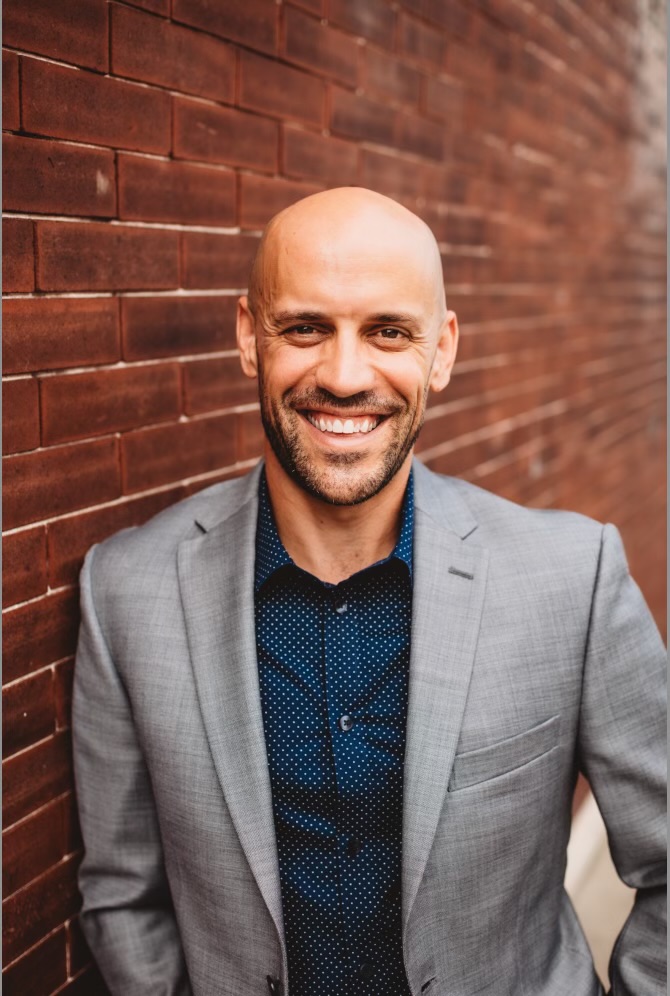
Doug Higgins
Founder, Collision Advisory
Former CFO at Kroger's Midwest Division and CEO of TAG Auto Group. Doug brings institutional financial rigor to the collision repair industry.
Connect on LinkedInMore from Industry Data
800 collision shops closed last year. Here's what that number actually means.
Roughly 800 collision shops closed in a single year, and it's getting repeated as proof the independent shop is finished. Here's what kind of number it actually is.
Total losses hit a record in 2025. The number of totaled cars still fell.
A shop owner asked me how total losses can be at record highs while Copart sells fewer totaled cars. When I pulled the numbers, I realized I'd been reading it wrong too. Here's how a rate and a count moved opposite directions in the same year, and what it means if your bays feel quiet.
Boyd Q1 2026: What it tells you about your shop
Seven numbers from Boyd Group's Q1 2026 earnings call and what each one means for an independent collision shop operator. The macro you are running in, where the structural advantages sit, and where the squeeze is real.