Why a collision group keeps paying rent on a shop it closed.
You've probably seen it. A collision group shuts down one of its locations, then keeps paying rent on the empty building for years. From the outside it looks like someone got trapped in a lease, or made a bad call and won't admit it. Most of the time it's neither. Somebody ran the math, and the math worked.
I used to make these calls in a former life, closing stores at scale. Here's what's actually happening, because once you see it, it changes how you think about your own shop.
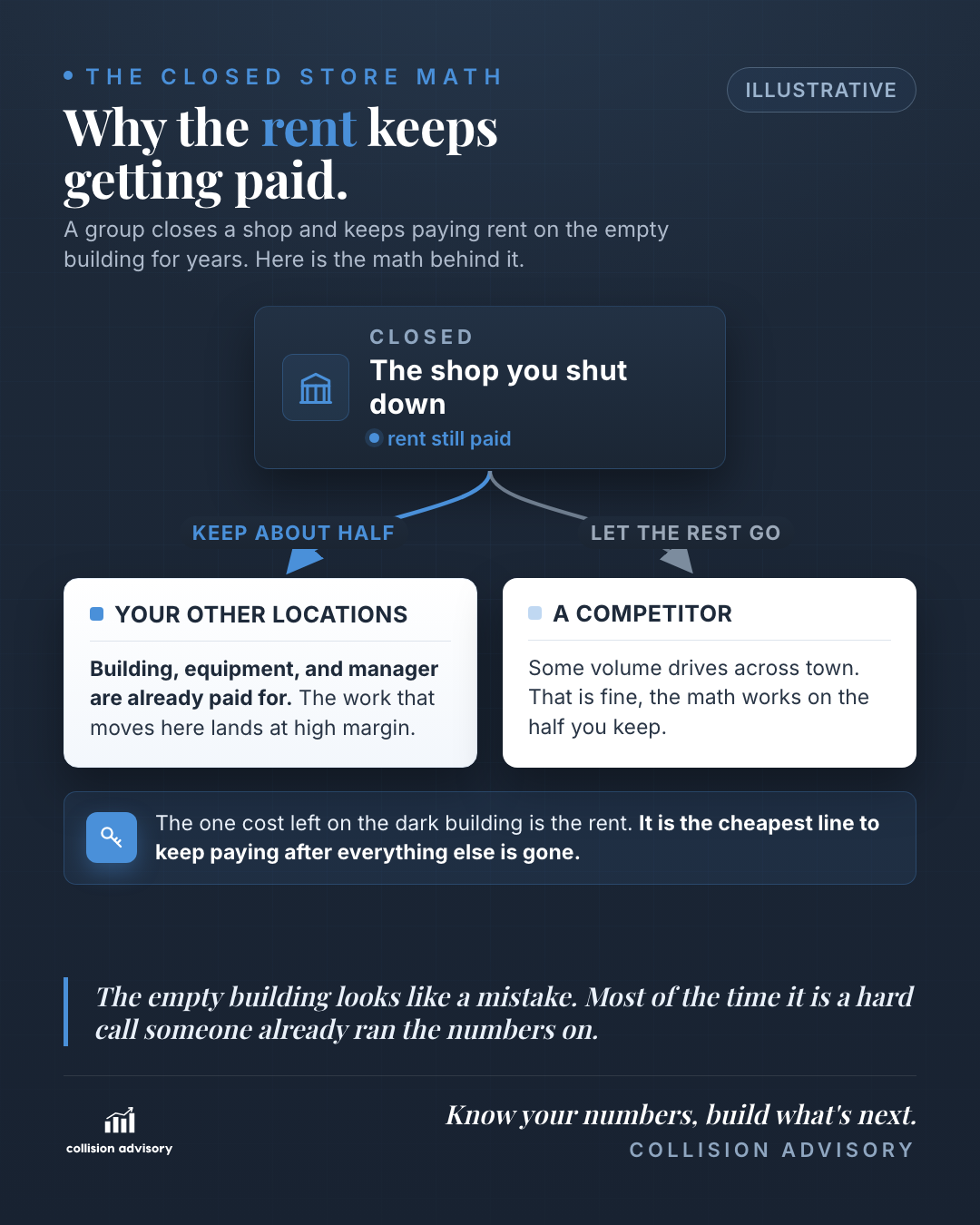
The work doesn't vanish, and they don't expect to keep all of it
When a group closes a shop, the business that ran through it doesn't disappear overnight. Some of it follows the customers, the DRP relationships, and the jobs already in the pipeline over to the group's other nearby locations. But here's the part people miss. They aren't trying to keep all of it, and they know they won't.
Want insights like this in your inbox?
Subscribe to the Collision Advisory newsletter. Financial strategy and industry analysis for collision repair operators, delivered weekly.
In the closing analysis, you put a number on retention, and it's never 100 percent. Maybe you keep half. Some of the rest drives across town to a competitor, depending on how close the next shop is. That's not a failure of the plan. It's built into the plan. The decision only has to work on the share you keep, not on the whole thing.
Why the surviving work is worth so much more
Now look at where that retained work lands. It moves to locations that already have the building, the equipment, the manager, the front office. All of that capacity is already paid for. It was there before the closed shop's work showed up, and it's there after.
So the transferred work doesn't carry a second set of fixed costs. The only new money attached to it is the direct cost of doing the job, the parts, the paint, some labor. Everything else is already covered. That means the work comes in at a much higher margin at the receiving shop than it ever earned standing on its own. This is fixed-cost leverage, and it's the quiet engine under the whole decision.
The one cost you can't walk away from
Closing the location strips out almost its entire cost base. The staff, the utilities, the equipment, the management layer, all of it goes away. The one thing you usually can't shed is the lease. So you keep writing a rent check on a dark building.
Put it together. You lost some of the revenue on purpose. You kept a rent payment you'd rather not have. And you still come out ahead, because you eliminated a whole operating cost base and moved the surviving work onto locations where it drops to the bottom line at a far better rate. The rent turns out to be the cheapest line on the page to keep paying after everything else is gone.
What this has to do with your one shop
You don't have to run a group to use any of this. The same math answers a question every owner should be able to answer about their own shop. What does a dollar of work actually earn here, once you account for the fixed costs that are already covered, and the volume that would survive somewhere else if you weren't around?
Most owners have never run that number. They look at a full building and assume every car is pulling its weight, or they look at a slow week and panic, without knowing which work is carrying the fixed costs and which is just passing through. The operators who know the difference make calm decisions. The ones who don't either overreact or coast.
None of this is fun to watch. Closing a shop puts people out of work and takes a choice away from a town. I'm not cheering it, I'm explaining the math under it, because seeing it clearly is how you stay off the wrong end of it.
The empty building with the lights off looks like a mistake. Most of the time it's a hard call, made by someone who knew exactly what their numbers would do. That kind of clarity is worth having about your own shop, long before you ever face a call that big.
Know your numbers, build what's next.
If you want this kind of operator finance read every week, my email is here: collisionadvisory.com/subscribe.
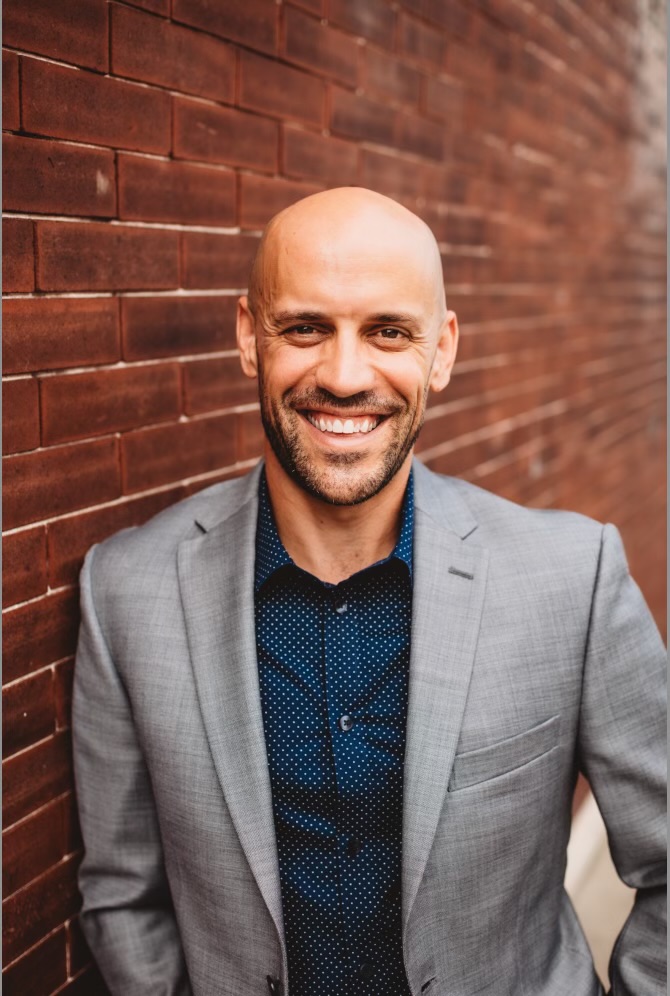
Doug Higgins
Founder, Collision Advisory
Former CFO at Kroger's Midwest Division and CEO of TAG Auto Group. Doug brings institutional financial rigor to the collision repair industry.
Connect on LinkedInMore from Operator's Edge
Why Your Body Shop's Margin Looks Worse in a Busy Month
A wave of cars comes in, the P&L looks terrible, and the owner starts cutting. Usually the cars are just spending ahead of what they have paid back. Here is how to tell a timing swing from a real margin problem.
What Is Your Shop Actually Worth? What a Buyer Does to Your Number First
A buyer rebuilds a shop's earnings before applying a multiple. See the three adjustments, a worked example, the timing decisions, and the deal terms owners should understand early.
Should You Drop Your DRP? Run This Number First
The DRP keep-or-drop decision comes down to one break-even retention number. Here is the full model, in dollars, with the adjustments most versions of this argument skip.